
Time Space Compassion in health & social care
Supporting Scotland’s major health, social care and improvement priorities
How Time Space Compassion helps deliver Scotland’s major health and social care and improvement priorities
Who is this document for?
Suicide prevention leads
Mental health clinical leaders
Health and social care improvement leads
Service leaders and commissioners
What will this document support you to do?
Understand - how Time Space Compassion aligns and can support national and local policy priorities and change work
Explain – how your work supports Time Space Compassion and contributes to suicide prevention
Translate - plans and priorities into action that contribute to suicide prevention
This publication contributes to Suicide Prevention Scotland’s part in:
Building a whole of government and whole of society approach
Strengthening Scotland’s awareness and responsiveness to suicide
Promoting and providing effective, timely and compassionate support
Embedding a coordinated, collaborative and integrated approach to preventing suicide
When might this document be most helpful?
Reviewing strategies, action plans and progress
Evaluating or improving plans, projects and services
Reporting on how your work contributes to national priorities and programmes for change
Developing new service, project or funding proposals
The Big Picture - and how it shapes our work
In Scotland, our national vision for health and wellbeing is a Scotland where people live longer, healthier and more fulfilling lives.
Over the past 5 years, a set of national strategies and change programmes have been developed to support the alignment of policy, services, and improvement work, to help realise this outcome.
These strategies shape how decisions are made every day, including how policy is written, how services are designed, and where resources are directed. If you’re working in suicide prevention, it’s highly likely they are already influencing your work directly or indirectly.
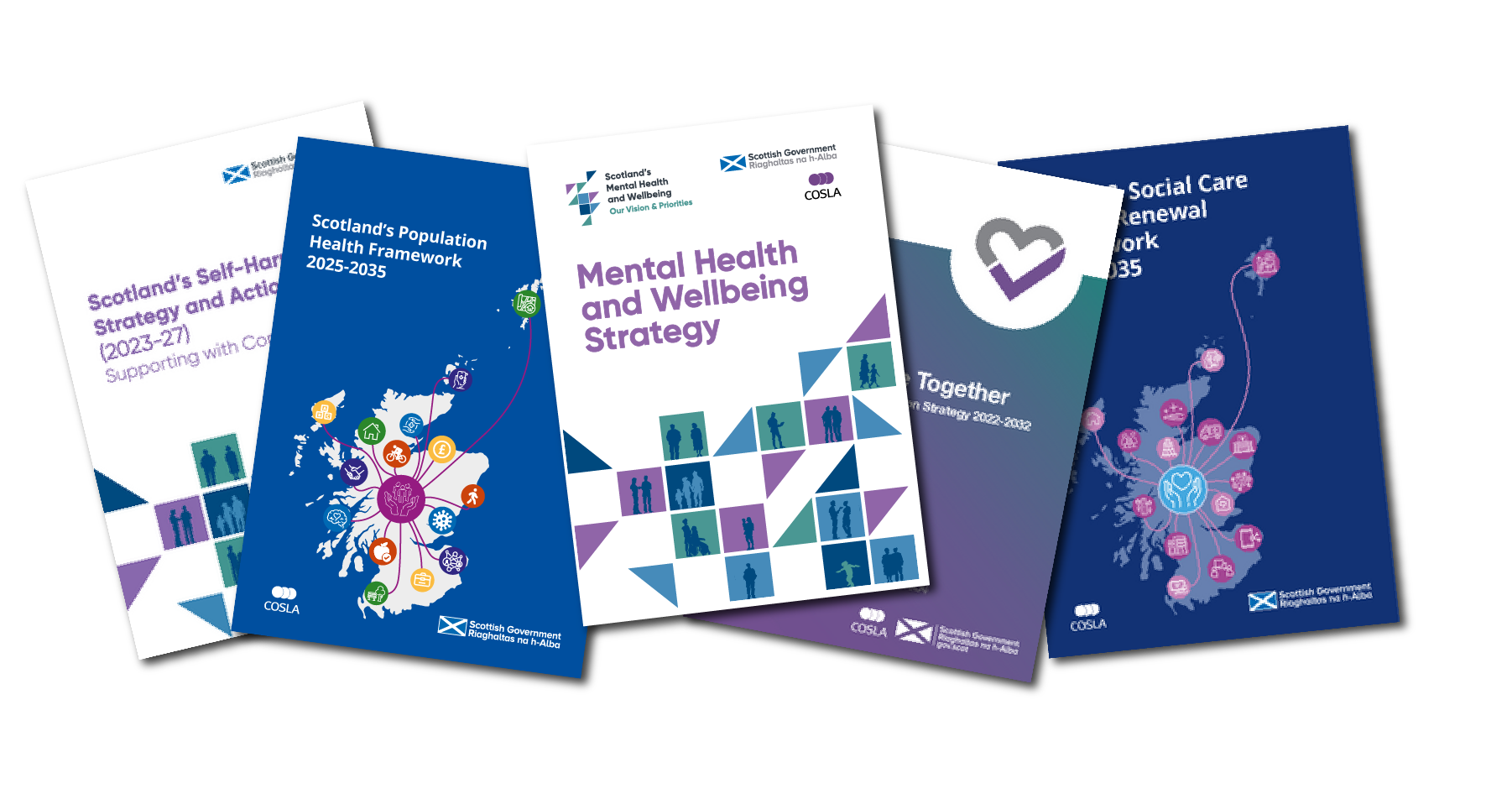
The key strategies shaping suicide prevention work include:
Health & Social Care Service Renewal Framework (2025-2035)
Population Health Framework (2025-2035)
Creating Hope Together: suicide prevention strategy (2022 to 2032)
Self-harm strategy and action plan (2023 – 2027)
Alongside these, a range of shared approaches describe how we work together to care, improve, and support people. These include:
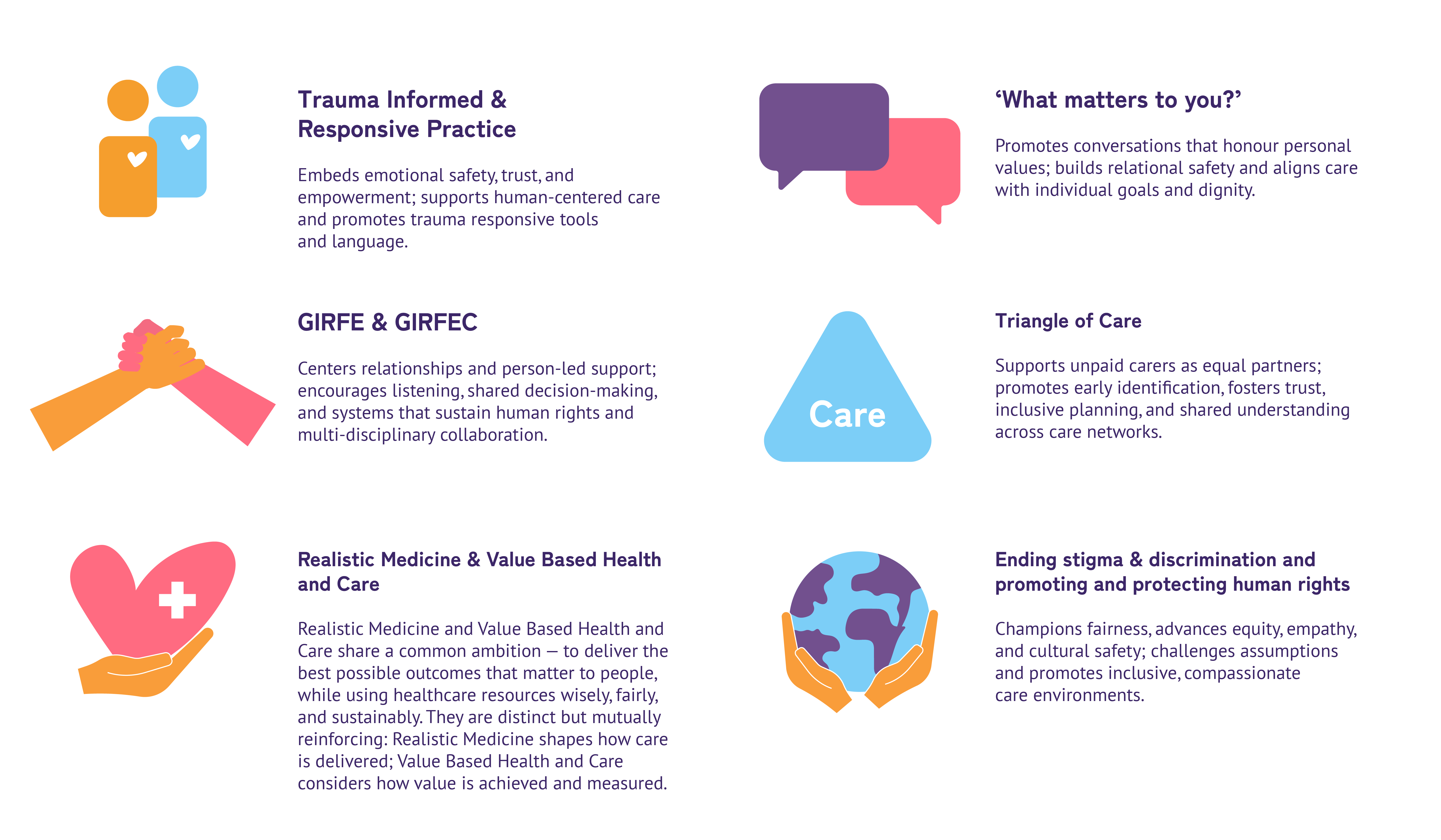
Trauma informed and responsive practice
Getting it Right for Everyone (GIRFE)
Getting it Right for Every Child (GIRFEC)
‘What matters to you?’
Realistic Medicine and Value Based Health and Care
Triangle of Care
Ending mental health stigma and discrimination
What is Time Space Compassion - and how does it fit?
Time Space Compassion is a practical, values-led approach to suicide prevention. It was developed as a way to describe what matters most when supporting people in crisis and has since become a unifying approach - a golden thread - running through work on suicide prevention and self-harm across Scotland. It provides tools, language, and frameworks to help teams translate national strategies and priorities into meaningful, compassionate action in everyday work. If you’d like to learn more, you can explore further at Time Space Compassion – Suicide Prevention Scotland.
This document builds on the original Time Space Compassion Introductory Guide by setting out how Time Space Compassion can be integrated into and strengthen the change approaches already used in your wider organisation and collaboratives.
Prefer a digital version? You can also download the digital version.
Key national change approaches – in summary
1. Trauma Informed and Responsive Practice
What it is
Creating care and spaces that recognise the impact of trauma and adversity, and responding in ways that prevent further harm, support recovery, reduce inequalities, and improve life chances. This includes fostering safety, trust, transparency, choice, control, and empowerment.
Why it matters
Trauma informed practice is about being equipped to respond in ways that avoid re-traumatisation and actively support healing and empowerment. It requires an understanding of how trauma affects people’s experiences of services, relationships, and decision-making, especially in moments of distress or risk.
Time Space Compassion supports trauma informed and responsive practice by:
Describing actions that promote emotional safety, trust, and empowerment for people affected by suicide or self-harm.
Encouraging relational and human-centred support.
Offering language and tools that help teams stay focused on what matters most to people affected by suicide or self-harm.
Promoting the National Trauma Transformation Programme, training and advocating for a human rights-based approach to care and support.
Trauma informed and responsive practice can help people build trust in the support we offer, share what’s going on for them, seek and receive help, and start to engage in planning and care to support their recovery. Learn more at Homepage - National Trauma Transformation Programme and this learning note by the Improvement Service and Suicide Prevention Scotland on how to embed a trauma informed approach in suicide prevention and self-harm.
2. Getting it Right for Everyone
What it is
GIRFE is Scotland’s approach to designing and delivering person-led, coordinated, and multi-agency support from young adulthood through end-of-life care. It places the individual at the centre of decision making and ensures professionals work together to provide clear, consistent and personalised support across life stages.
Why it matters
Designing systems and ways of working that reflect this approach helps create the conditions where people receive the right support which reflects what matters to them. GIRFE strengthens relationships, builds trust and shared understanding, and helps create the stability people need for recovery, choice, and wellbeing.
Time Space Compassion supports GIRFE by:
Focusing on and describing what a relationship and person-led approach can mean for people affected by suicide or self-harm.
Highlighting the importance of listening and working with people to understand and make sense of individual experiences, values, and needs.
Describing key opportunities for shared decision-making when supporting people affected by suicide or self-harm.
Describing why systems that help practitioners maintain caring, person-led relationships matter.
3. Getting it Right for Every Child
What it is
Ensuring every child and young person gets the right support at the right time so they can achieve their full potential by supporting a consistent, coordinated, rights respecting approach across services and placing children, young people, and their families at the heart of decisions.
Why it matters
By focusing on whole child wellbeing, coordinated working, and listening to the child or young person’s own experiences, it helps practitioners recognise changes, understand what matters to the young person, and create the conditions for prevention, early identification, compassionate response, and timely support.
Time Space Compassion supports GIRFEC by:
Promoting compassionate, attuned listening that helps children and young people feel heard and respected.
Supporting multi-disciplinary and agency working by providing a shared language and reflective framework for relational practice.
Supporting effective shared decisions, by outlining the importance and practice involved in slowing the pace, to enable meaningful participation by children, young people and families.
Promoting organisational conditions and resources that enable consistent, compassionate care.
GIRFE and GIRFEC help prevent suicide by shifting the focus from systems and procedures to the person, supporting personalisation of support and a relational approach to multi-agency working. These approaches build on ongoing work in Scotland to address system created challenges and to create the conditions for fair and equitable access and experiences for everyone. By focusing on dignity and respect, these approaches can help address stigma and fear of help seeking, ensuring people receive support that reflects their experience, needs and strengths.
Learn more about these approaches at Getting it right for everyone (GIRFE) - gov.scot and Getting it right for every child (GIRFEC) - gov.scot
4. Realistic Medicine & Value Based Health and Care
What it is
Realistic Medicine is about personalising care, reducing unwarranted variation, managing risk better, and strengthening the partnership between professionals and the people we care for. It encourages health and care professionals to ask, ‘What matters to you?’ rather than ‘What’s the matter with you?’
Value Based Health and Care delivers better outcomes and experiences for the people we care for through the equitable, sustainable, appropriate and transparent use of available resources. It focuses on maximising outcomes that matter to the people we care for, by working in partnership with them to agree and deliver interventions that really make a difference. At the same time, we must practise in a sustainable and cost effective way. It is about achieving the greatest possible benefit for individuals and populations with the resources available. This sits at the core of Value Based Health and Care and we can deliver it by practising Realistic Medicine.
Why it matters
To deliver outcomes that matter to the people we care for, we must change the way we deliver care. We must:
Take time to understand what matters to the people we care for and focus on helping them achieve their goals.
Balance biography with biology and apply evidence-informed practice.
Embrace a collaborative and multiprofessional approach to delivering care to keep our systems resilient.
Use our resources wisely.
Measure the right things including the outcomes that matter to the people we care for.
Keep kindness and compassion at the heart of delivering care and avoid transactional care.
By focusing on what matters to individuals, rather than what’s the matter with them, these approaches can help reduce stigma, support help seeking and giving, and creates the conditions for care that is safer, more effective, and more compassionate. They also help reduce the risks and harms associated with unwarranted treatment.
Time Space Compassion supports Realistic Medicine & Value Based Health and Care by:
Promoting evidence based ways to support shared decision-making and personalised support for people impacted by self-harm, suicidal thoughts and behaviours.
Describing the qualities and the practical steps that support trust, respect, and communication between people seeking help and clinicians.
Providing clear advice and signposting to learning that supports and values compassion and listening skills as core clinical practices.
Encouraging system level change that allows time and space for meaningful relationships, especially at moments of vulnerability or crisis.
Realistic Medicine and Value Based Health and Care helps prevent suicide and improve support for people affected by self-harm by creating the conditions for trauma-responsive, person-centred care. Together, they encourage practitioners to work in partnership with people, understand what matters to them, and provide care that is compassionate, personalised and focused on outcomes that matter — supporting a shift in attitudes, behaviours and culture that helps ensure people are active and equal participants in their care, and practitioners are supported to provide relational continuity of care.
Learn more about this approach at Realistic Medicine – Shared decision making, reducing harm, waste and tackling unwarranted variation
5. ‘What matters to you?’
What it is
A person-centred approach that encourages healthcare practitioners to ask individuals about their values, preferences, and goals — shifting the focus from “What’s the matter?” to ‘What matters to you?’
Why it matters
This approach helps build trust, dignity, and autonomy in care. It supports people to feel heard and respected, and ensures that care is clinically appropriate and emotionally and personally relevant. It encourages practitioners to move beyond diagnosis and procedure, toward relationships that honour the whole person.
Time Space Compassion supports ‘What matters to you?’ by:
Encouraging meaningful conversations that prioritise what people affected by suicide and self-harm value in their care and life.
Promoting compassionate listening, helping people feel heard, respected, and understood — and building practitioner confidence to ask and listen well.
Supporting care that aligns with personal goals, fostering dignity, autonomy, and a sense of control.
Focusing on relational safety, where people feel safe enough to express what matters most without judgment or pressure.
Describing what it means to embed trauma responsive principles into care planning, including thoughtful use of risk formulation and safety planning.
'What matters to you?’ helps prevent suicide and improve support for people affected by self-harm by offering practical ways to develop relationships and offer care that is human, responsive, and grounded in what matters most to each person. Learn more about ‘What matters to you?’
6. The Triangle of Care
What it is
A model that emphasises collaboration between people receiving care, carers, and practitioners to ensure safe and effective mental health care.
Why it matters
The Triangle of Care recognises that carers are not just supporters but key partners in care. Their insights, emotional needs, and relationships with the person receiving care are vital to recovery and safety. When carers are actively involved, care can become more holistic, responsive, and grounded in real-world relationships.
Time Space Compassion supports Triangle of Care by:
Encouraging collaboration with carers as partners in care.
Building relational safety and trust among everyone involved in a person’s support network.
Supporting inclusive care planning,where carers’ insights and emotional needs are respected.
Recognising the emotional impact on carers, and promoting compassionate engagement and carer support.
Creating space for dialogue, reflection, and shared understanding across the triangle of care.
Promoting carer awareness among staff, ensuring carers’ needs and experiences inform timely, effective, and person-centred outcomes—especially during times of transition.
Prioritising early identification of carers, recognising their role in reducing distress and preventing suicide through early support and connection.
Ensuring clear and compassionate information-sharing practices that balance confidentiality with carers’ need for understanding and involvement in safe, effective care.
The Triangle of Care can prevent suicide and improve support for people affected by self-harm by strengthening relationships between everyone involved in a person’s care network and ensuring the support and care provided is grounded in real relationships and lived understanding of how suicide is affecting the person and their life. Carers offer vital insights into a person’s needs, stressors, and strengths, helping shape safer, more responsive and realistic safety and care plans.
Learn more about The Triangle of Care
7. Ending Mental Health Stigma and Discrimination
What it is
Ending stigma and discrimination in services means ensuring equitable and timely access to anti-stigma, anti-discriminatory, culturally safe, compassionate, non-judgmental support and services that validate lived experience and promote dignity and wellbeing.
Why it matters
Ending stigma – a social process that involves the damaging labelling, stereotyping, and exclusion of individuals or groups based on perceived differences that deviate from dominant social norms. Ending discrimination – a key part of stigma. It is the inequitable or prejudicial treatment of individuals or groups based on their stigmatised identities. It can be intentional (explicit prejudice) and unintentional (underlying in organisations and systems).
Time Space Compassion supports efforts to end stigma and discrimination by:
Promoting human connection, equity of access, empathy, and relational safety as foundations for reducing stigma and discrimination.
Supporting structural change, by providing resources to support co-production and meaningful engagement with marginalised communities.
Supporting compassionate listening and inclusive care, helping individuals feel seen, heard, and respected.
Creating safer spaces where people feel able to share their experiences and access culturally safe support.
Encouraging practitioners to reflect on their own assumptions and build confidence in responding with care, compassion and cultural humility.
Work to end stigma and discrimination can prevent suicide and improve support for people affected by self-harm by offering equity of access to places free of judgement, where people can feel safe, respected and seek support. By challenging these barriers, we can start to grow relational safety, compassion, and inclusion, making it easier for people to seek and give help, be heard, and receive support that reflects experience, needs and strengths. Learn more at See Me | End Mental Health Stigma and Discrimination | End Mental Health Stigma and Discrimination