
Enabling conversations toolkit
A guide created by and for young people to find help and support when experiencing painful feelings about suicide.
This is a tool to help you discover ways you can talk to others about painful feelings like self-harm and suicide in a way that you feel comfortable and in control.
Communicating doesn't have to be spoken verbally, feelings can be written or even drawn, but it is important to communicate no matter how you decide to do it.
You can use this toolkit to help you decide on:
A safe and trusted person to talk to
An environment you feel secure in
Little things to keep you grounded
Most importantly it can give you confidence in the methods you've picked to explain your feelings your way, talk honestly about your situation, and build a support system around yourself.
Always remember, you don't have to do this alone.
We made three short films with the young people, parents and practitioners who use this toolkit. Each is for a different audience.

We made three short films with the young people, parents and practitioners who use this toolkit. Each is for a different audience.
For Young People
For Parents & Trusted Adults
For Professionals
Resources
As well as this digital edition of the toolkit, you can also download printable and digital PDFs.
Simply click or tap to download the right resource for you:
Enabling Conversations toolkit, printable, colour version - click here
Enabling Conversations toolkit, printable, black and white version - click here
Enabling Conversations Belly Bands (printable) - click here
How to Use the Enabling Conversations Toolkit
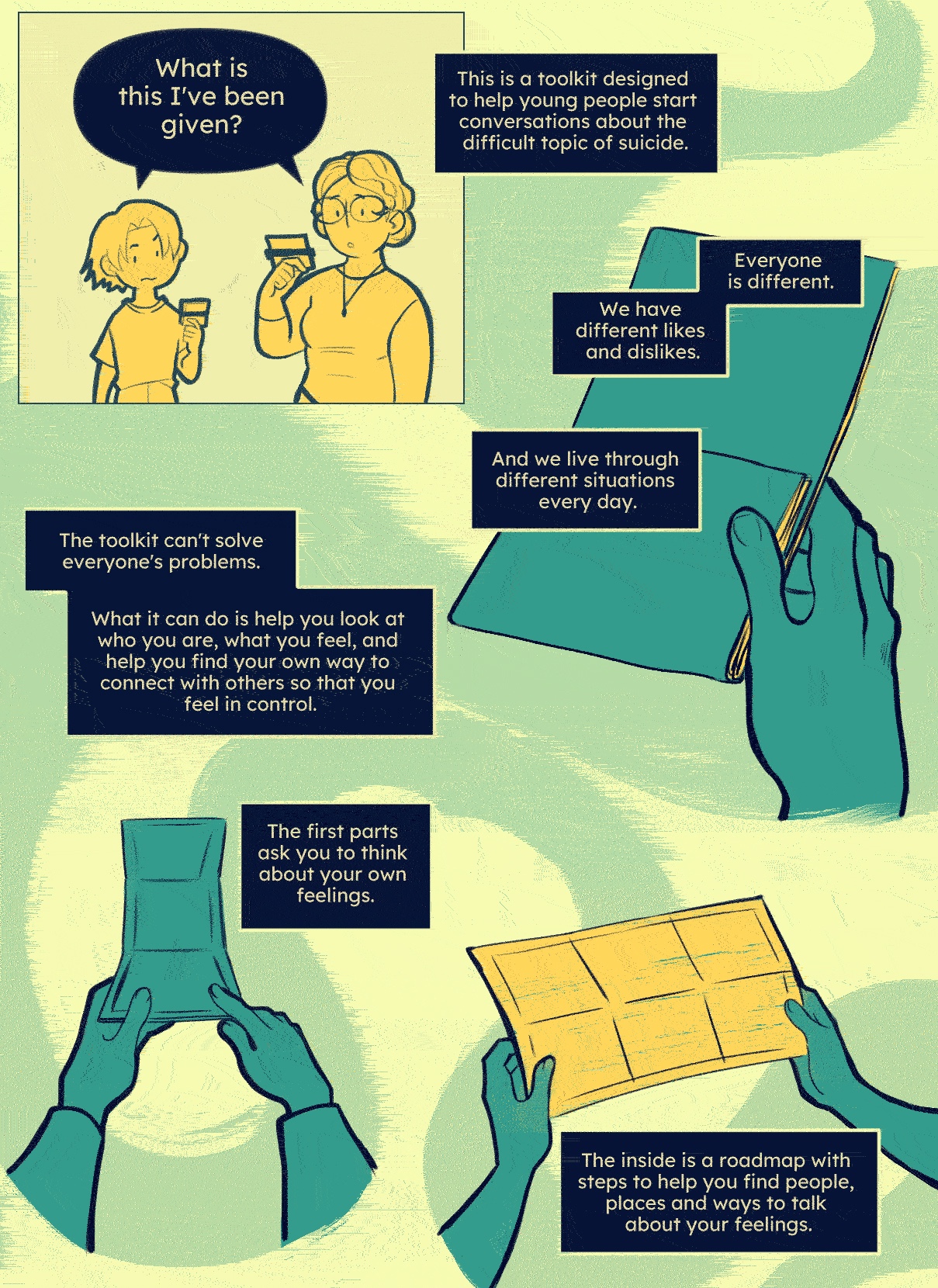
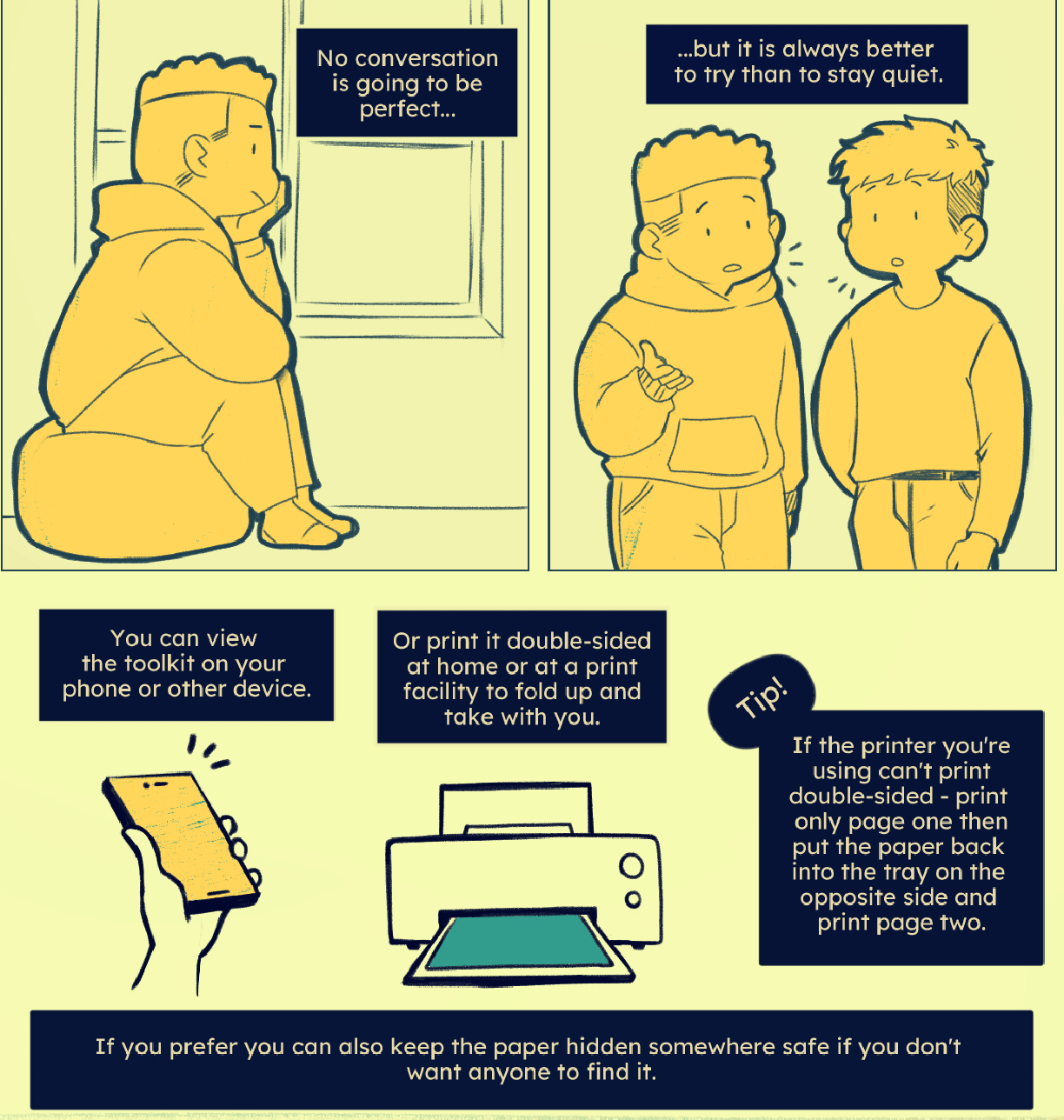
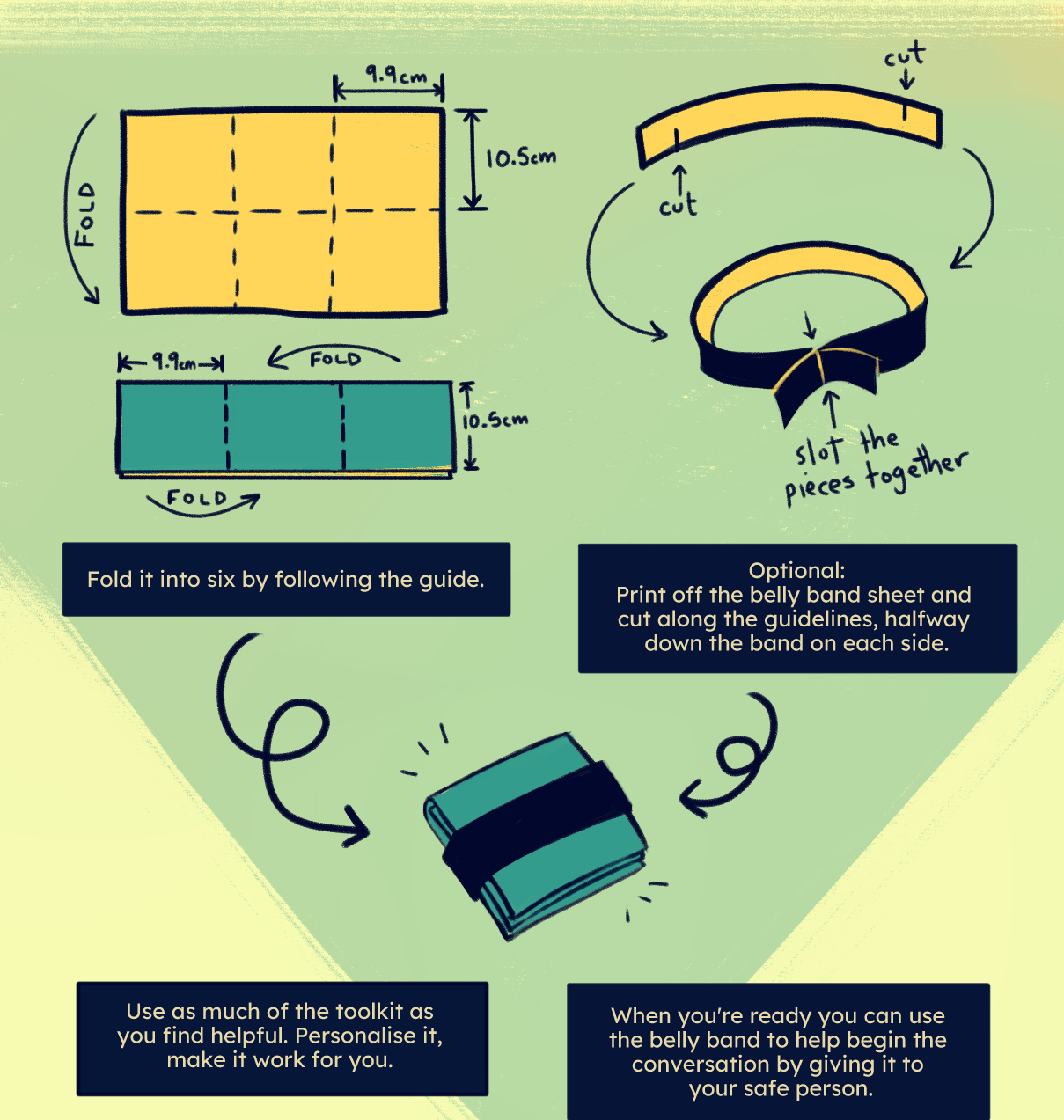
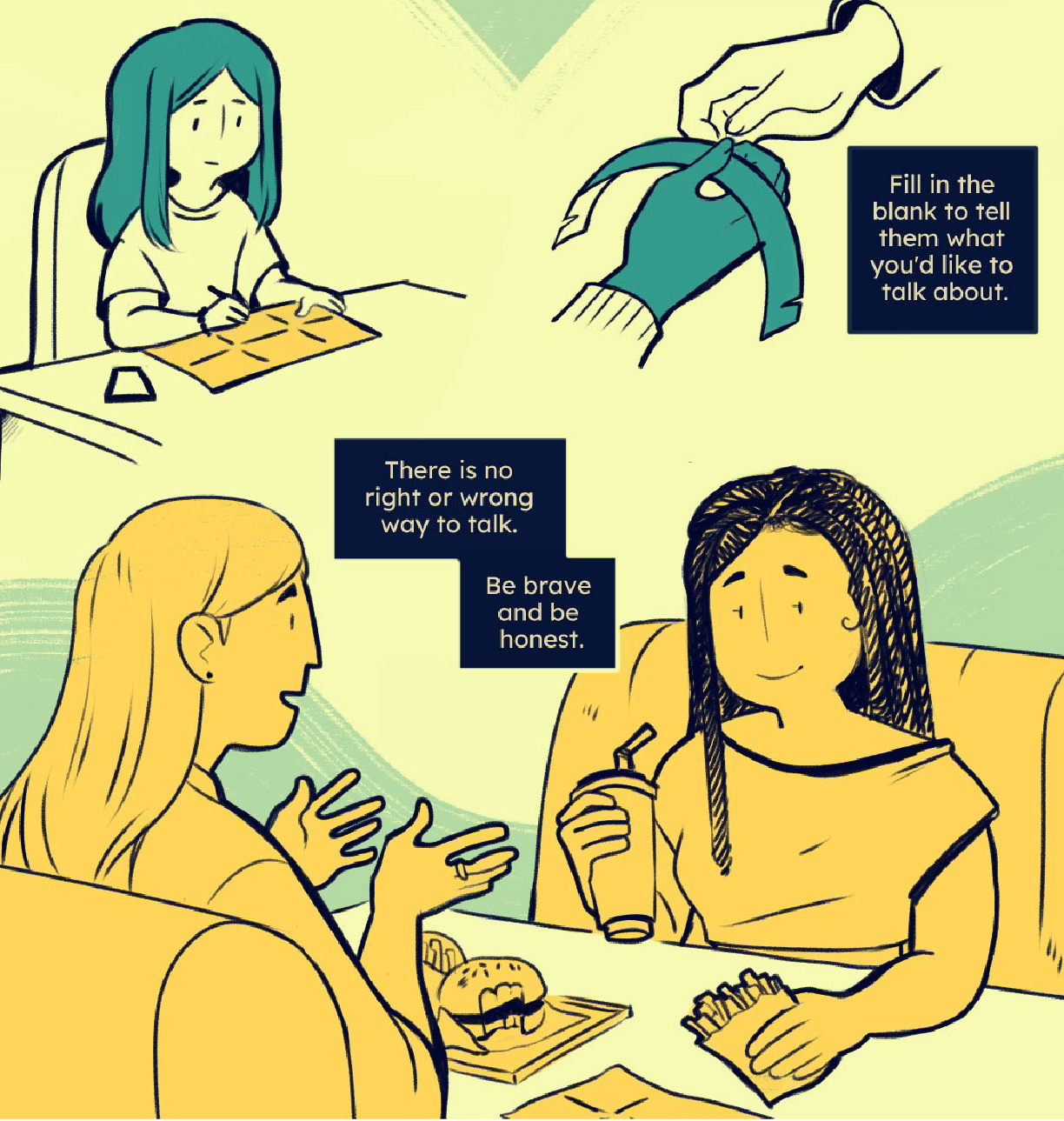

Download this map to your phone
Working with other young people we've created this map designed for your phone.
It includes helpful advice about how to approach the journey to find information and support that you need.
Four steps to getting support you need
Tap the button to save each task to your camera roll, so you've always got them to hand.


Emotional pain can be hard to navigate.
Sometimes this pain can manifest into feelings of suicide.
If you are feeling suicidal seeking help is important.
You may be worried about talking to someone about suicide in case you are viewed or treated differently. We call this stigma.
Stigma around suicide stops people from talking about it at all.
We hope this toolkit helps, but if you need more support keep scrolling for some helplines and groups that can give you more direct help.
Information and support lines
If you are ever in immediate danger or have the means to cause yourself harm you should call 999.
Contact a helpline
If you're experiencing suicidal thoughts or you feel like you want to end your life right now, it's important to know that you're not alone. There is practical support and advice available.
It may not be an easy, but reaching out for support is an incredibly brave thing to do.
SHOUT
Text: 'SHOUT' to 85258
This service is anonymous and available to everyone 24/7. When you text 'SHOUT' to 85258 you will receive an automatic reply before being connected to a trained volunteer who will listen without judgement to how you are feeling
Childline
Phone: 0800 1111
For children and young people under 19, this service is open 24/7. Childline counsellors are trained, experienced and available to listen and support you.
You can find other contact details - click here.
Our Enabling Conversations toolkit was co-produced with young people and created by Cat Laird and Eilidh Macleod in partnership with V&A Dundee and Suicide Prevention Scotland. Download this implementation guide to learn more.
