What are the effects of suicide-related stigma?
On this page learn about how suicide-related stigma affects people.
What are the effects of suicide-related stigma?
Suicide-related stigma affects people with experiences of suicidal thoughts, people who have attempted suicide, people affected by suicide through their professional/personal lives (e.g., those caring for someone experiencing suicidal thoughts/behaviours), and people who have been bereaved by suicide.
Research and people with lived and living experiences tell us that suicide-related stigma most commonly leads to negative consequences among people affected by suicide.
These consequences include people being less likely to ask for or seek help, poor mental health (e.g., depression and anxiety), and a higher risk of suicide and grief-related difficulties (among people bereaved by suicide). Stigma can lead to isolation, social withdrawal, feelings of guilt and shame, as well as rejection.
However, in some cases, suicide-related stigma can be protective, leading to people seeking help.
For example, among people who are religious, suicide may be viewed as morally wrong as a result of the stigma attached to suicide. In order to avoid ‘sinning’ by attempting or dying by suicide, they seek help within their religious communities, through praying, or from healthcare professionals.
There are things you can do to tackle suicide-related stigma and its negative consequences. Throughout the Suicide-related stigma section of our website you will find information about the factors that contribute to suicide-related stigma. You can also find out how to recognise stigma and better understand how it affects people.
Most importantly, you will find information on how to address suicide-related stigma
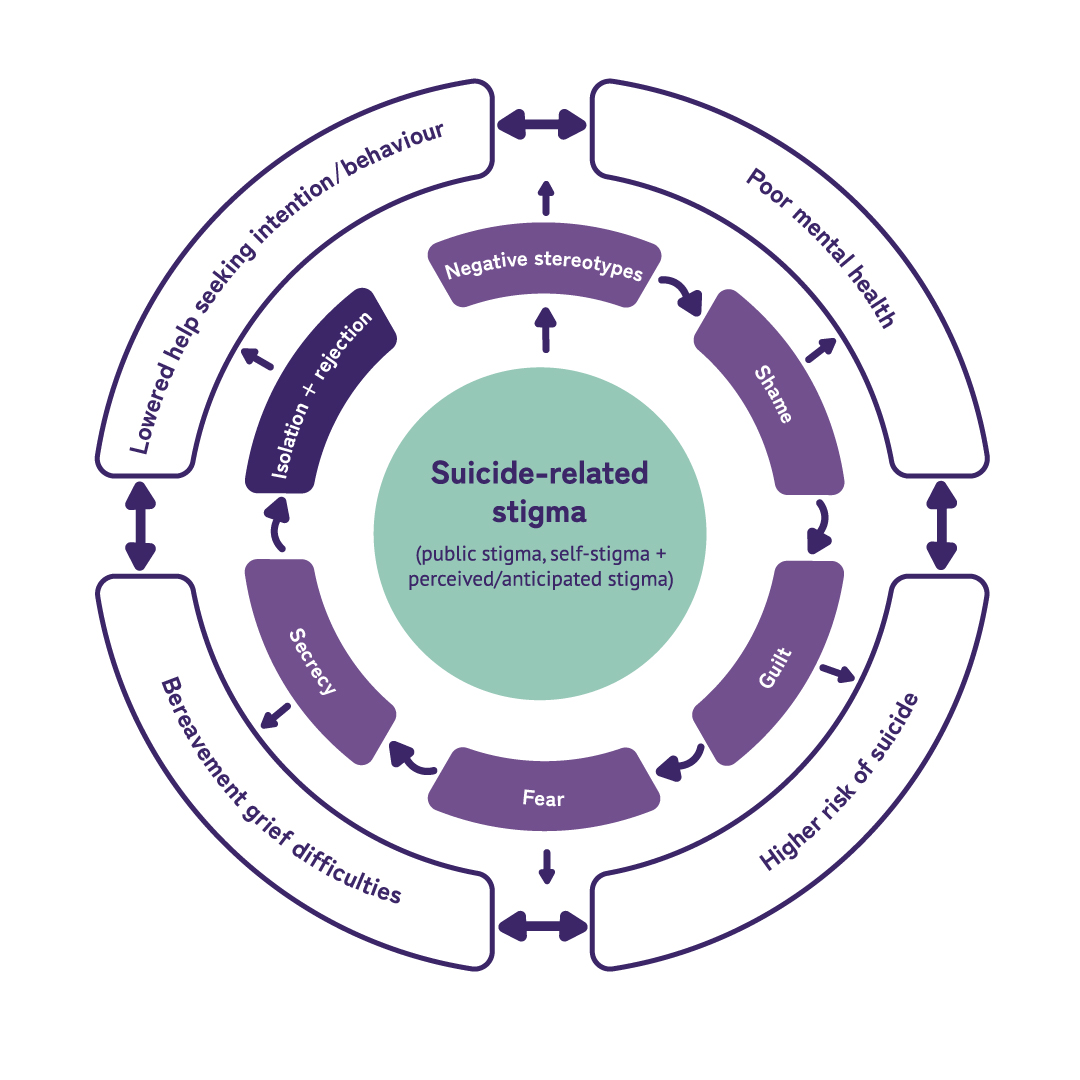
The visual summarises research showing how suicide‑related stigma can lead to harm. Studies find that negative stereotypes often lead to feelings of shame, guilt, and fear, which can encourage secrecy.
This secrecy can create isolation or a sense of rejection. Research links this pattern to several outcomes including reduced willingness to seek help, poorer mental health, an increased risk of suicide and, for people bereaved by suicide, more complicated grief.
Interestingly, the review also shows that those with poor mental health and at an increased risk of suicide are more likely to stigmatise suicide. The diagram highlights how stigma can quietly shape behaviour and wellbeing at each step, making seeking support and having conversations about suicide harder.