Understanding risk and spotting the signs
Helpful information if you're caring for someone who is experiencing suicidal thoughts.
Introduction
Suicide doesn’t have a checklist.
But there are ‘signs’ we can look out for which could indicate that someone may be considering ending their life.
It's really helpful to look out for the warning signs below, but it’s not always easy to know. Each person will express, or not express, their feelings differently.
Some people will be clear that they are thinking about suicide, while others won’t.
Some experience suicidal thoughts over an extended period of time, while others find their thoughts arise as sudden urges.
This can make it difficult for you to understand what's going on. If you’re worried, try gently checking in. We cannot be certain that someone is thinking about suicide without asking directly[JC1] .
Signs someone may be thinking about suicide
Whilst there are not always easy to recognise, signs could include:

Changes in behaviour – loss of interest, withdrawal, giving away possessions.

Physical indicators – weight loss, lack of interest in appearance.

Expressing thoughts or feelings – hopeless, sad, guilty, worthless.

Saying this like, “I can’t take it anymore”, “Everyone would be better off without me”.
Risk factors
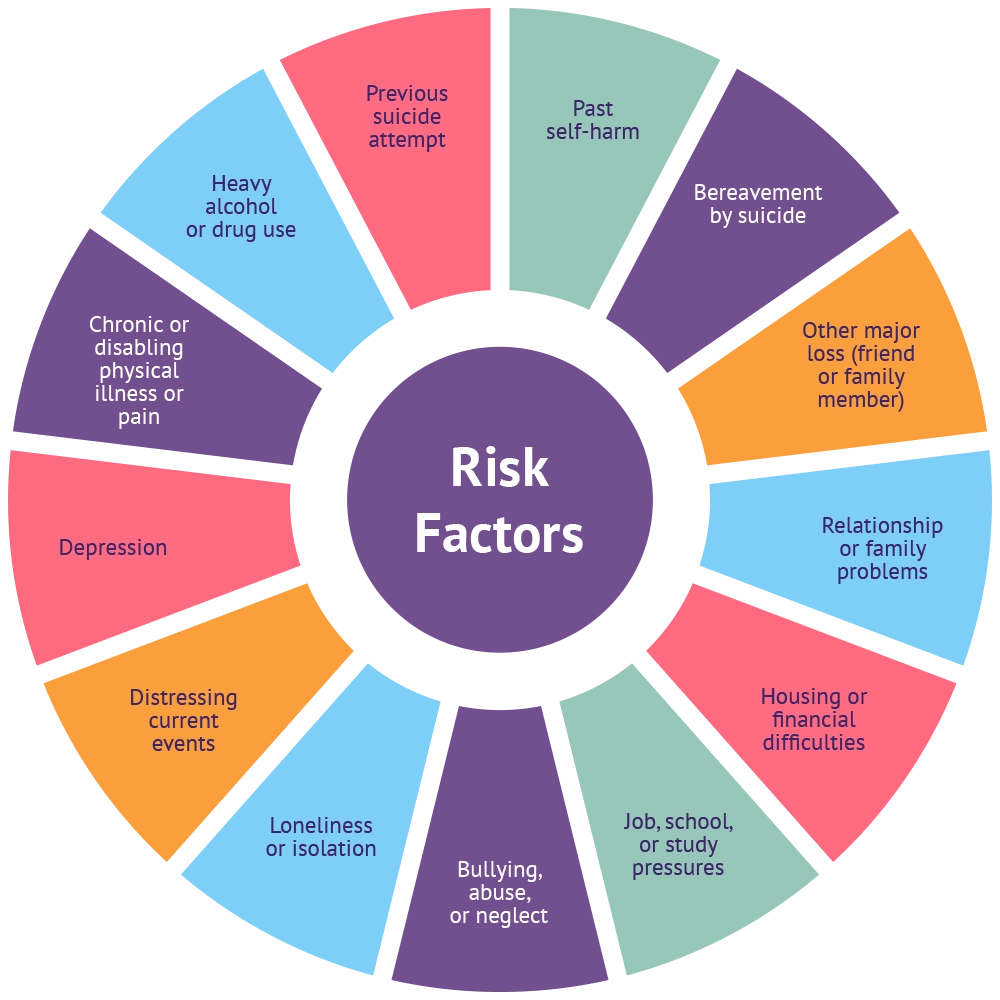
There are also some situations to look out for that could trigger suicidal thoughts. These include: